Massage Tutorial: Sciatica myofascial release techniques
Channel: Massage Sloth
Category: Howto & Style
Tags: massage techniques for shooting leg painsciaticamassage therapymyofascial release for sciaticasciatic nerve anatomydeep tissue massagesciatica massagemassage techniques for sciaticahow to massage sciaticashooting leg pain
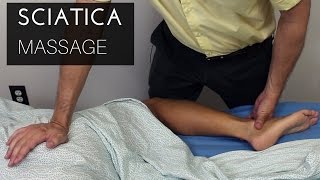
Description: My new book is out! It's called Massage Is Weird: massagesloth.com/book Do you have massage clients with low back/hip pain that sometimes shoots down their leg? In this video, I review the anatomy of the sciatic nerve and the local musculature, and take you through my basic myofascial release protocol for sciatica symptoms. Table of contents: 0:00 Introduction 0:23 What is sciatica? What are the symptoms? 0:45 Sciatic nerve anatomy 1:20 Relevant gluteal landmarks 4:38 Incorporating sciatica massage into your sessions 5:10 Undraping the hip 5:25 Working with touch sensitivy, using the "myofascial angle" 6:00 Myofascial release from superior to inferior 7:10 Working with the fascia 8:50 Including the lateral pelvis and low back 10:38 Treatment duration 11:12 Myofascial release from inferior to superior 13:15 Body mechanics for lazy myofascial release 13:40 Working with the lateral pelvis 14:40 Using open fists for myofascial release 16:00 Working with the hip rotators longitudinally 18:24 Pin and stretch for the external hip rotators (gluteus maximus, piriformis, etc) 20:00 Working with the hip in abduction When you get clients in your massage office with low back pain, I recommend always asking about the hips. Pain and dysfunction in the two areas are tightly intertwined, and only working with the lumbar region while ignoring the hip extensors/rotators could mean ignoring the root cause of the pain. While working with sciatica, realize that the entire posterior pelvic region could be hypersensitive. While you could treat this sensitivity as if you were dealing with trigger points, I think it's much kinder to approach it from a myofascial release perspective: Slow, using little lotion or oil, and from an oblique angle. Many clients with hypersensitivity will be able to tolerate pressure when delivered in this way. Approach the SI joint, posterior and lateral pelvis, and upper femur from different angles, with the hip joint in different configurations. My goal during these massages isn't to "break up knots" or "strip out" any particular muscles, but rather to convince the local musculature that it doesn't need heightened tone/spasm, and to slowly desensitize the region. While disc dysfunction may be present, I find that working with the descending soft tissue can reduce sciatica symptoms effectively. Let me know what you think, and if you have any tips of your own! Do you work with hip flexors on all of your sciatica clients? Do you start with more direct work? Thanks for watching! Support me on Patreon: patreon.com/MassageSloth My Facebook blog: facebook.com/massagesloth More stuff: massagesloth.com