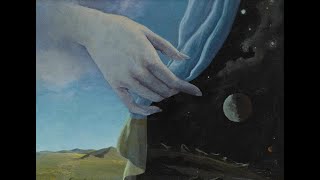
Helen Lundeberg
Channel: DistantMirrors
Category: Education
Tags: helen lundeberg
Description: Helen Lundeberg (1908–1999) was a Southern Californian painter. Along with her husband Lorser Feitelson, she is credited with establishing the Post-Surrealist movement. Her artistic style changed over the course of her career, and has been described variously as Post-Surrealism, Hard-edge painting, and Subjective Classicism. Helen Lundeberg was born in Chicago in on June 24, 1908, the eldest child of second-generation Swedish parents. In 1912 her family moved to Pasadena, California. As a child, she was an exceptional student and an avid reader. Her intellectual aptitude earned her inclusion in a Stanford University "Study of Gifted Children", which looked at the characteristics and development of children who ranked in the top 1% in California schools. During her early adulthood, Lundeberg's inclination was to become a writer. In the 1930s, Lundeberg was working in both the social realist and post-surrealist styles. She first exhibited at the Fine Arts Gallery in San Diego in 1931, when she showed her painting Apple Harvesters. In 1933 had her first solo show at the Stanley Rose Gallery in Los Angeles. She and Feitelson married that same year. Together in 1934, Feitelson and Lundeberg founded Subjective Classicism (or New Classicism), which later became known as Post Surrealism. Using her painting Plant and Animal Analogies as a case study and an ideal, Lundeberg wrote the New Classicism manifesto. Post Surrealism represented the first concentrated response in the US to European Surrealism. Unlike their European counterparts, American Post-Surrealist artists did not rely on random dream imagery. Instead, carefully planned subjects were used to guide the viewer through the painting, gradually revealing a deeper meaning. This method of working appealed to Lundeberg's highly intellectual sensibilities and her engagement with surrealism is present, to varying degrees, in her work throughout the rest of her career. Lundeberg's work with the WPA in Southern California is noteworthy both because her works were well-received and because she was one of only three women artists in Southern California making public artwork for the WPA. During the 1950s, Lundeberg moved towards geometric abstraction and Hard Edge painting and away from the representational sensibility that had informed her early work. Though always based in reality, Lundeberg created mysterious images that exist somewhere between abstraction and figuration. Repeatedly described as formal and lyrical, Lundeberg's paintings rely on precise compositions that utilize various restricted palettes. Paintings from this period employ the idea of "mood entity", a concept in Post Surrealism that was concerned with evoking states of mind, moods and emotional content unique to each work. Lundeberg and Feitelson were part of a loose group of Post-Surrealists that also included the artists Grace Clements, Philip Guston, Reuben Kadish, Harold Lehman, Lucien Labaudt, Knud Merrild, and Etienne Ret. During this period, Lundeberg was one of the most prolific painters working in Southern California. In the 1960s and 1970s, Lundeberg continued her journey through abstraction, exploring imagery associated with landscapes, interiors, still life, planetary forms and intuitive compositions. She often revisited compositions or themes in various palettes. In the 1980s, Lundeberg created a series of paintings that deal with landscapes and architectural elements. Her love of the 15th Century Italian Classicists is reflected in many of these works. Throughout her 60-year career, Lundeberg imbued her work with a strong personal vision and a nuanced palette. She created her last known work, the painting Two Mountains, in 1990. In 1999, at the age of 91, Lundeberg died from complications from pneumonia. Helen Lundeberg's paintings have been exhibited widely in prominent museums, including the J. Paul Getty Museum in Los Angeles, Whitney Museum of American Art in New York, the San Francisco Museum of Modern Art, the Brooklyn Museum, Los Angeles County Museum of Art, Nora Eccles Harrison Museum of Art at Utah State University and the National Museum of American Art in Washington D.C. Her work was most recently included in the J. Paul Getty Museum's Pacific Standard Time: Crosscurrents in L.A. Painting and Sculpture, 1950–1970, and in the Los Angeles County Museum of Art exhibition titled In Wonderland: The Surrealist Adventures of Women Artists in Mexico and the United States. [from Wikipedia] Music: Alio Die "Practical Rituals"