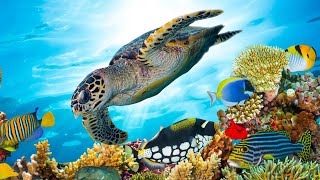
Sea Turtles Explained
Channel: What Lurks Below
Category: Education
Tags: sea turtlesea turtles swimmingsea turtle factssea turtle strawsea turtlessea turtle sizesea turtles explainedsea turtles hatchingsea turtles matingwhat lurks belowtestudinestime of the dinosaursoceans explainedsea turtles eating jellyfishturtles explainedwhat lurks underneathsea turtle rescueturtle factsbaby sea turtlesgreen sea turtlebaby sea turtles going to oceanbaby sea turtles hatchingsea turtles documentary
Description: Sea turtles, sometimes called marine turtles, are reptiles of the order Testudines. Learn more about these ocean species in Sea turtles explained! SUBSCRIBE for the latest videos: goo.gl/7xzjzR #10. All seven species of sea turtles are considered threatened or endangered Sea turtles are so old that they watched the dinosaurs evolve and then become extinct. Although sea turtles have been around for about 110 to 150 million years, the seven remaining species that exist have all been classified by conservationist groups like the International Union for Conservation of Nature as either threatened, endangered, or critically endangered. #9. One out of thousand hatchlings survive to adulthood We just mentioned the fact that sea turtles have hardly ever had great population growth rates. Well, that’s because they have a particularly gruesome childhood. You see, even though they are classified as reptiles and not amphibians, the adult female sea turtle lays eggs on the sand on land. #8. The sex of sea turtles depends on nest temperature This fact isn’t unique to sea turtles alone but applies to all reptiles. Science has revealed some truly interesting things about how reptiles gestate. For most other creatures, sex is nearly randomly determined with an about 50% chance of an offspring being born as either sex. #7. Sea turtles don’t have a favorite food Certain facts about the diet of sea turtles have been so misrepresented that most people now believe that jellyfish constitute their favorite food. This isn’t quite true. The diet of a sea turtle will vary by its location and species. And although most sea turtles will choose to eat jellyfish, this is only because of population statistics. #6. Their migratory habits vary from species to species Migration is a behavior that a wide variety of animals exhibit. It is performed for a wide variety of reasons. Typically, animals migrate to find food. This can coincide with changing weather patterns. When winter arrives, most creatures like to migrate away from their homes to find their prey, which are in turn running away from the cold. When it comes to sea turtles, some species love to migrate while others do not. #5. They are the largest hard-shelled marine turtle in the world Sea turtles are not the only marine turtles in existence. They just tend to dominate the conversation because they are so large. In reality, there are at least 30 species of other marine turtles in existence. These creatures, unlike the sea turtle, come with soft shells that set them apart. They don’t have the complex shell architecture which sea turtles have. They also hardly ever grow to a decently large size. #4. Sea Turtles are a key link in the marine food chain As large as sea turtles are, they are by no means at the top of the food chain. This is because the sea is filled with some of the largest predators known to man including the killer whale and the great white shark. Even though sea turtles have shells intended to protect them from predation, the great killers of the ocean still find a way. #3. Green sea turtles are not green A particular specie of sea turtle is referred to as the green sea turtle. Even though the name seems pretty direct, you wouldn’t be able to pick out a green sea turtle by color alone. As a matter of fact, the green sea turtle has a shell that is usually brown or olive. And so, where does the name come from? Well, it comes mostly from their diet. Unlike other species of sea turtles, the green sea turtle is largely an herbivore. #2. Sea turtles cannot retract into their shells Land turtles have an advantage here over sea turtles because whenever there are signs of trouble, a land turtle can simply retract its limbs and head into its shell until it’s safe to come out again. Well, sea turtles cannot do that and there are key reasons why. For one, if their head and limbs were retractable, those spaces would quickly become filled with seawater, messing with their physiology and potentially killing them. #1. Sea turtles can hold their breath for up to 5 hours underwater This is impressive, especially when you consider that they can dive to depths of up to 960 feet beneath the ocean’s surface. Given that they are reptiles, they still need to breathe, of course. And so, they need to resurface periodically. The reason they dive so deep is that sometimes the food near the surface of the water is scarce. And so, only by going deeper can they satisfy their hunger. They also dive deep in order to avoid predators. Sea turtle predators, like sharks, like to stick close to the surface of the water. By going deep, sea turtles save themselves a lot of trouble.