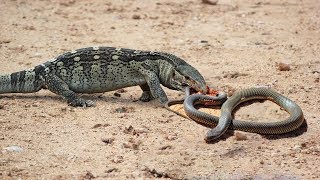
Iguanas Explained
Channel: What Lurks Below
Category: Education
Tags: iguanas falling from treesreptilesiguana factsgreen iguana attackgreen iguana bitewild animalsiguana attack snakeiguana vs snakesiguana informationwhat lurks underneathiguana attack humaniguana swimmingiguana iguanaiguana attack with tailiguanas explainedgreen iguana factswhat lurks belowreptiles explainedoceans explainedgreen iguana petiguana petgreen iguanaspecies explainedanimals explainediguana documentary
Description: Iguanas explained! Learn more about these herbivorous lizards from their ability to swim & change color to their long lifespan. Iguanas are beautiful reptiles. SUBSCRIBE for the latest videos: goo.gl/7xzjzR #12. There are 45 different iguana species Iguanas are a genus of large, herbivorous lizards which can typically be found in the tropical areas of Mexico, Central America, South America, and the Caribbean. They live on land, in rocks, and in trees. #11. Iguanas hate the cold Iguanas are cold blooded organisms. This means that they lack the ability to control their own body temperature. And so, they need to find the need a means to keep their temperature warm, lest they die. And for most iguanas, the key to doing that is sunbathing. If the body temperature of an Iguana falls beneath 40 Fahrenheits, their muscles essentially become paralyzed and they fall into hibernation. #10. Iguanas have a couple of great defense mechanisms Iguanas have quite a few predators. These include Raccoons, fish, crows, vultures, and feral pigs. However, iguanas are not easy pickings for these predators. They do a good job at fighting back sometimes. One of the main things they do to get away from predators is to thrash their tails. This often startles the predators and wards them off. #9. Some iguanas can change color The color of an organism can serve several purposes in nature. An organism can be brightly colored in order to attract mates or to ward off predators. Some organisms can change their color in order to change the signals they are giving off to other organisms. When people usually think of color-changing organisms, chameleons come to mind. However, certain species of iguana can also change their color too. #8. Some iguanas are excellent swimmers We’ve already mentioned that iguanas typically live on land, in rocks, and in trees. We’ve also already mentioned that since they are cold blooded, they need to keep themselves warm. In spite of these two facts, there are certain species of iguana which love to swim. The iguanas of the Galapagos Islands are well adapted to swimming and spend quite a bit of time underwater. #7. They are herbivorous When it comes to their diet, lizards can be carnivorous, herbivorous, or omnivorous. Iguanas, though they are quite large for lizards, are completely herbivorous. They forage exclusively on vegetation and foliage. Ironically, even though they are herbivorous, they have a higher bite force relative to their size than their carnivorous and omnivorous counterparts. #6. Iguanas have a third eye This feature isn’t unique to iguanas, but occurs in some other lizard species as well. They have a pale-looking scale towards the back of their heads that marks what is referred to as “the parietal eye”. Unlike the iguana’s two main eyes, the parietal eye is not as physiologically developed. It can’t create detailed images like the other two eyes can. However, it is sensitive to changes in lightness and darkness. #5. They have surprisingly long lifespans Iguanas have one of the widest ranges between their minimum lifespan and their maximum lifespan. They can live as little as six years. And they can live as long as sixty years. Naturally, the exact age will vary based on the species and the individual. And it also varies based on if they live in the wild or in captivity. #4. Iguanas can communicate with each other Iguanas may not be the most developed of species but they communicate with each other pretty well. Most animals use sounds when communicating with each other. Iguanas, though, tend to mostly rely on visual signals in the form of body language. They communicate with each other by bobbing their heads. They also move the flap of skin under their necks called a dewlap. #3. Iguana’s typically shed their skin Skin shedding is a known phenomenon among reptiles. However, when people are typically asked about it, the creature that is most usually mentioned is the snake. As it turns out, Iguanas shed their skin too. This happens naturally throughout their lives. As they grow, their skin cells grow old and die. #2. Iguanas can recognize their owners by sight and sound If you’re an iguana owner who has ever wondered if these creatures can identify and remember you, then the answer is yes. Iguanas have fairly strong senses and are able to clearly see their owners and recognize them. They may not come calling to their owners like a dog would. But then, they react to them in their own way. #1. They carry salmonella bacteria Salmonella is one of the most popular disease-causing bacteria in existence. And it just so happens that most iguanas carry this bacteria in their bodies. Particularly in their digestive tracts. Iguana’s have evolved to not be affected by these salmonella bacteria.